
Inside a 1,100 Sq Ft Marble & Travertine Floor: A Foyer Medallion, a Diagonal Layout, and the Prep Nobody Sees
Some floors are installed. Others are composed. This one spans the entire first floor of a Central Florida home: 1,100 square feet of marble and travertine, laid on the diagonal, framed by a darker marble border, and anchored by a custom medallion where guests enter.
Here's how a project like this comes together, what happens before a single piece of stone is set, and what it takes to keep a natural-stone floor beautiful for years to come.
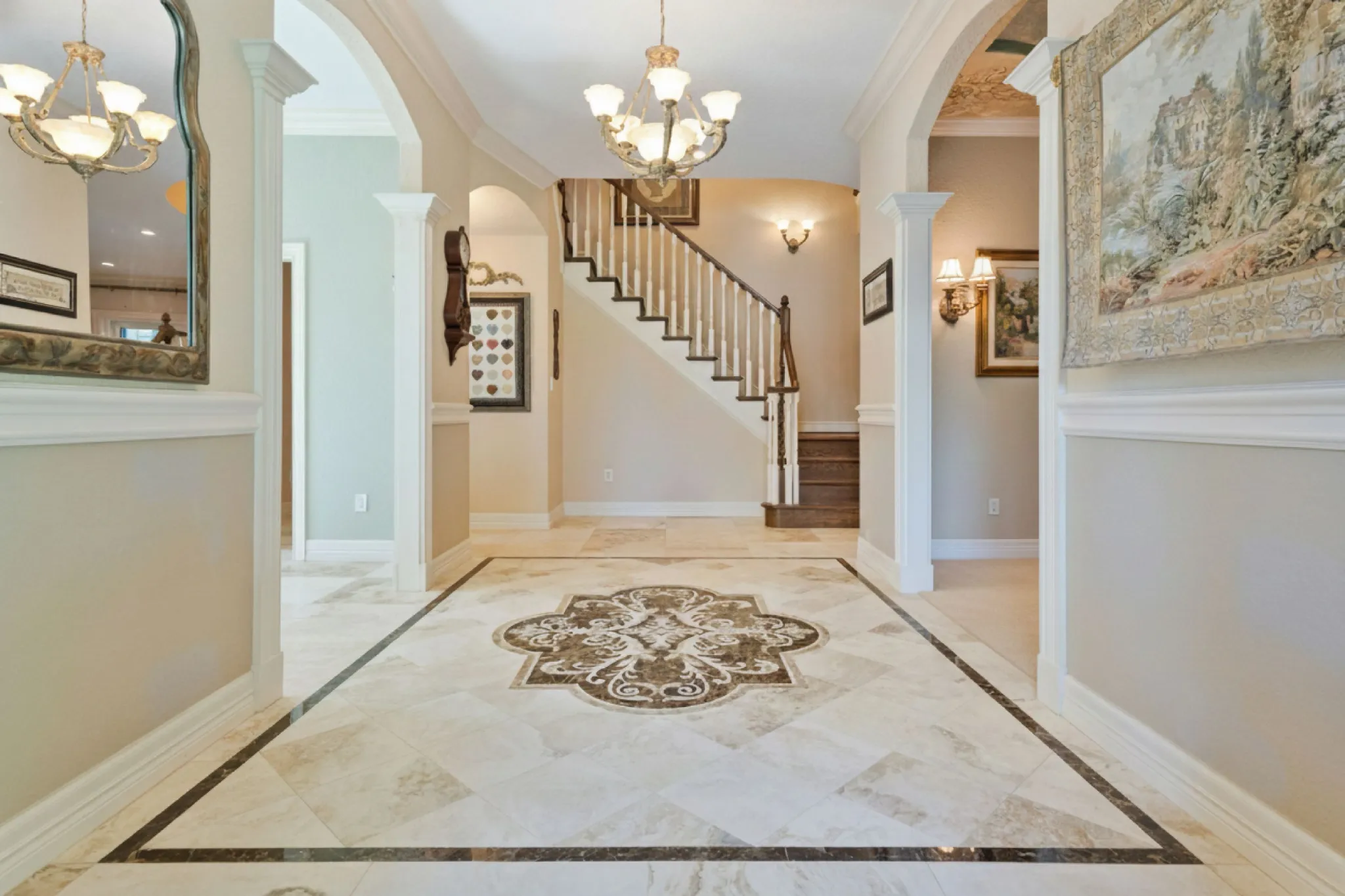
The foyer sets the tone for the whole house
The centerpiece is a 6' x 5' medallion set into a diagonal field of stone. A darker marble border wraps the pattern, giving the eye a clean edge without stealing attention from the medallion itself.
On a floor this size, the hardest decisions happen before the first tile goes down. Where does the medallion center? Where do the border lines land so the pattern flows naturally into the living room, hallway, and kitchen? Getting those lines right is what makes the finished floor feel intentional.
Want to see more of this style of work? Visit the Oakland project page.
The part of the job you'll never see
Natural stone is unforgiving. It does not flex or hide imperfections in the slab beneath it. Before the stone came out of the crates, the crew checked the concrete, ground down high spots, and cleaned, primed, and leveled low areas. The floor was then vacuumed and mopped so every following layer had the surface it needed.
This installation used an ARDEX system: S 1-K crack isolation membrane, X 77 mortar, and FG-C grout. ARDEX describes S 1-K as a two-coat system. The membrane helps protect the stone when limited slab movement occurs, but product choice is only part of the equation. Coverage, thickness, preparation, drying time, and the manufacturer's instructions all matter.
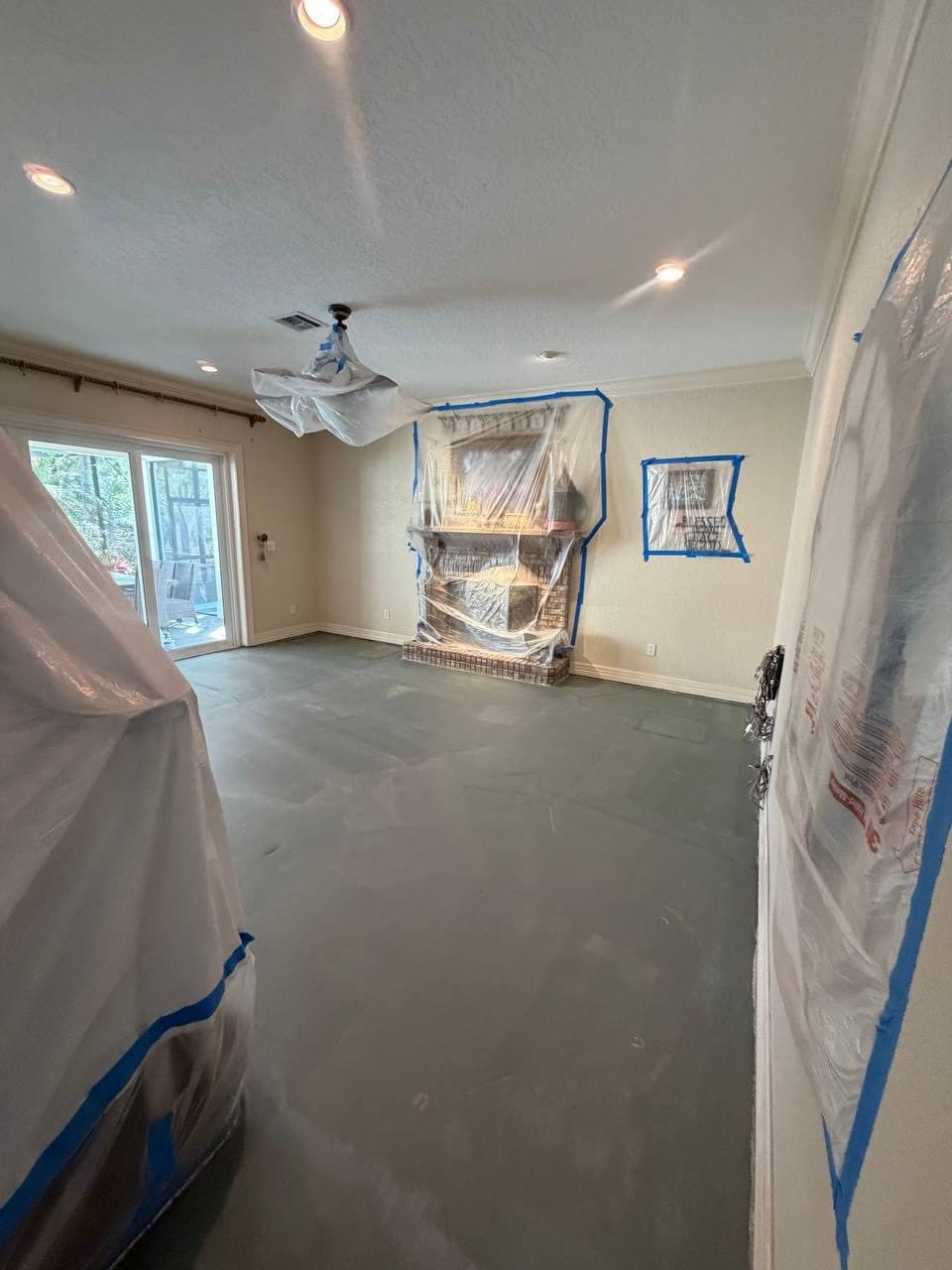
Filtered vacuum support and plastic enclosures also helped keep concrete-grinding dust contained instead of letting it travel through the rest of the home.
Keeping 1,100 square feet straight and the color even
A diagonal field, border, and medallion meeting in the same space creates a geometry problem as much as a tile problem. The team established four main reference lines and worked from them through each room so the pattern stayed aligned from the foyer into the adjoining spaces.
Five pallets of natural stone arrived on site, and tone can vary from pallet to pallet. Instead of emptying one pallet at a time, the installers blended pieces from several pallets across the floor. That spreads the natural variation evenly and avoids visible patches tied to the delivery sequence.
About the timeline and warranty coverage
When this update was first written in March, the crew estimated another four to five weeks to complete the floor. That estimate was specific to this project's size, layout complexity, cuts, and required drying and cure times—not a standard timeline for every stone floor.
Manufacturer warranty coverage depends on the complete approved product combination, installation requirements, and project documentation. ARDEX describes its tile and stone warranty tiers. We confirm the coverage that applies to an individual project in its final paperwork rather than promising one blanket term.
Living with marble and travertine
Etching and staining are different. A stain is discoloration that soaks into the stone. An etch is a dull spot left when something acidic—such as citrus, wine, vinegar, or many household cleaners—reacts with the surface. A single spill can cause both, and scrubbing an etch harder will not restore the finish.
- Use a cleaner made for your specific stone.
- Avoid vinegar and other acidic cleaners.
- Sweep or vacuum regularly so grit does not dull the finish.
- Blot spills promptly instead of letting them sit.
- Ask about an impregnating sealer. It can improve stain resistance, but it does not make stone stain-proof.
The Natural Stone Institute’s care guidance is a useful reference. For etched areas that need restoring, call a professional rather than experimenting with stronger cleaners.
Thinking about a stone floor of your own?
A medallion changes everything around it: the cuts, border, and the way the pattern carries into the next room. That is exactly the kind of planning we like to do with homeowners before a project begins.
Start with our floor tile installation page and then send us a few photos and rough dimensions. We'll talk through the layout, materials, and preparation your floor may need.
Further Reading
Marble travertine project update FAQ
What timeline was expected for this 1,100-square-foot floor? At the March 24 update, the team expected another four to five weeks for the reported 1,100-square-foot floor. That was this project’s remaining estimate, not a standard installation duration.
Why do you blend tile from multiple pallets during install? Natural stone varies in tone, so blending from separate pallets helps avoid visible color patches.
What makes prep so important before travertine installation? Surface correction, leveling, and crack isolation support long-term performance and cleaner final alignment.
Can I request a similar diagonal layout and foyer medallion design? Yes. We can review your space, goals, and material options, then map a layout plan during estimate and design discussions.
Other blog posts you may be interested in
How to Clean Shower Grout (Without Damaging Your Tile)
Practical cleaning guidance for homeowners dealing with recurring grout stains and mildew.
Read this post →Featured Contractor for The Tile Shop!
Behind-the-scenes context on craftsmanship standards, project quality, and process discipline.
Read this post →